
PLAKT:
Geert Goiris
Geert Goiris is a photographer drawn to moments of estrangement between people and their surroundings. Using large-format analog cameras, he travels to remote landscapes—from icy polar zones to arid deserts to abandoned modernist structures—capturing them with a precise, almost sacred calm.
Goiris’ images may appear ordinary at first glance, but they carry a quiet unease and seem suspended between past and future, between reality and myth. He describes his method as “anticipatory”: his photographs are not mere depictions of what is, but premonitions of what may come. He searches for signs of ecological or social change that unfold just beyond our immediate view, as if his work contains echoes of future ruptures.
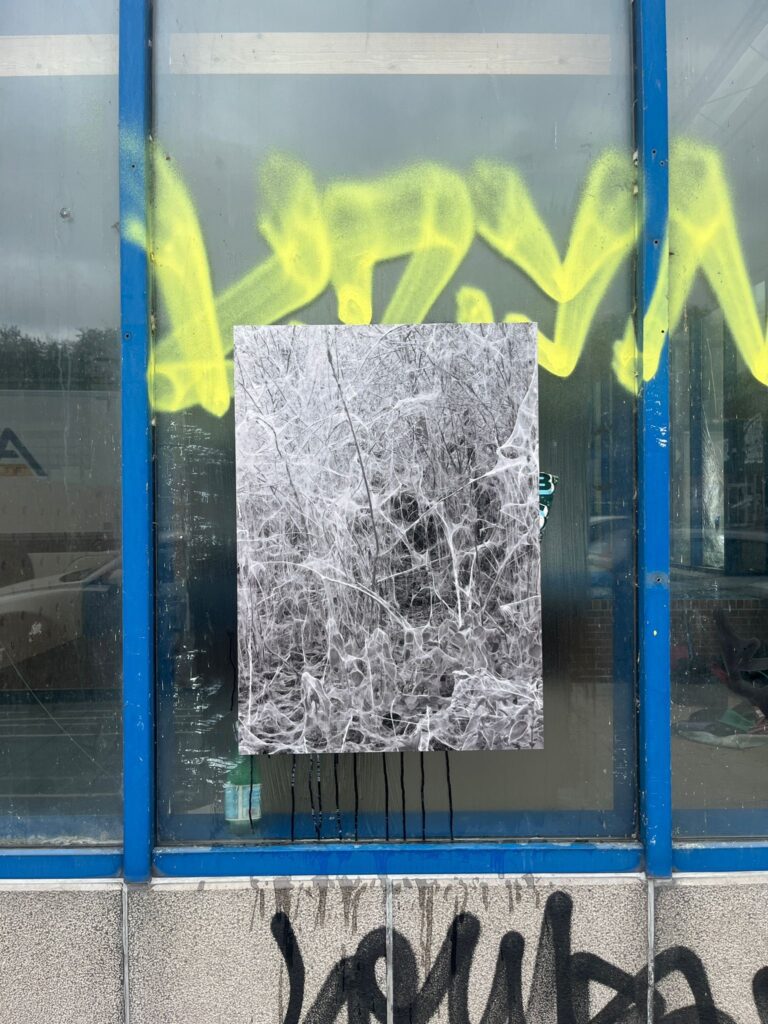
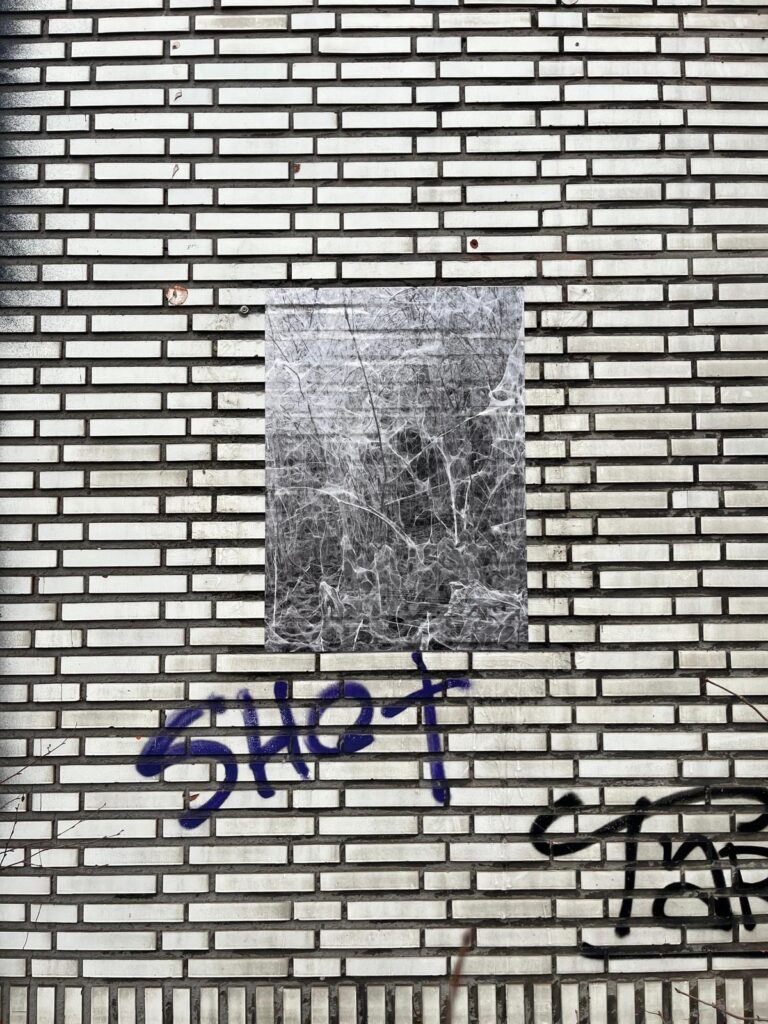


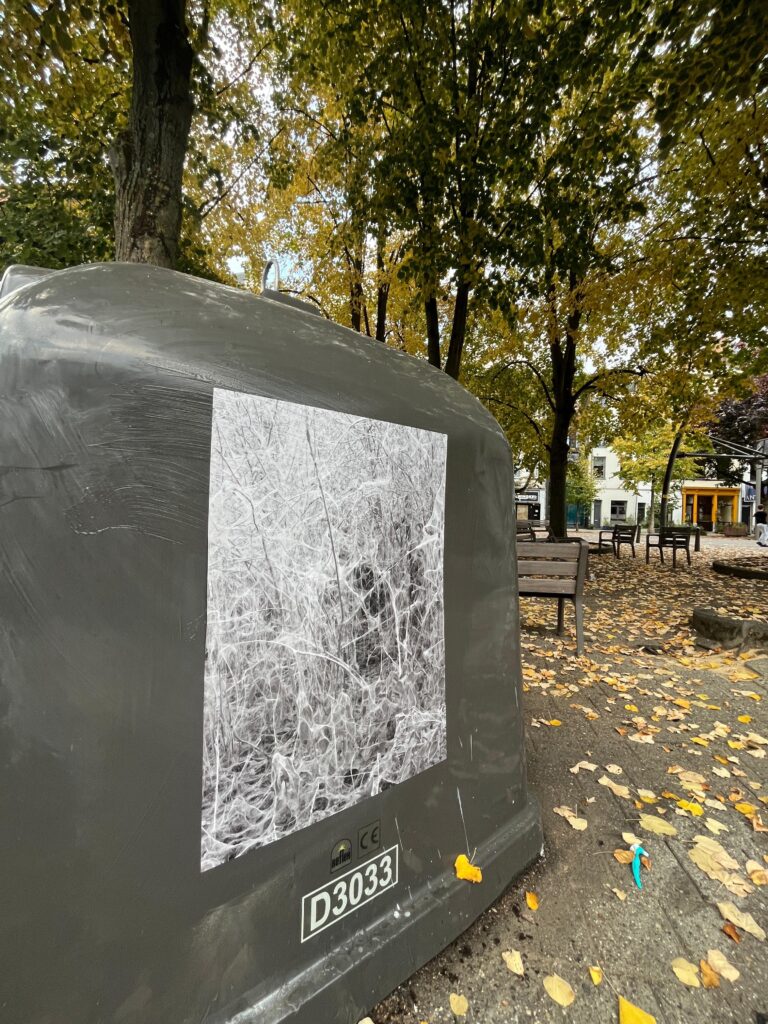
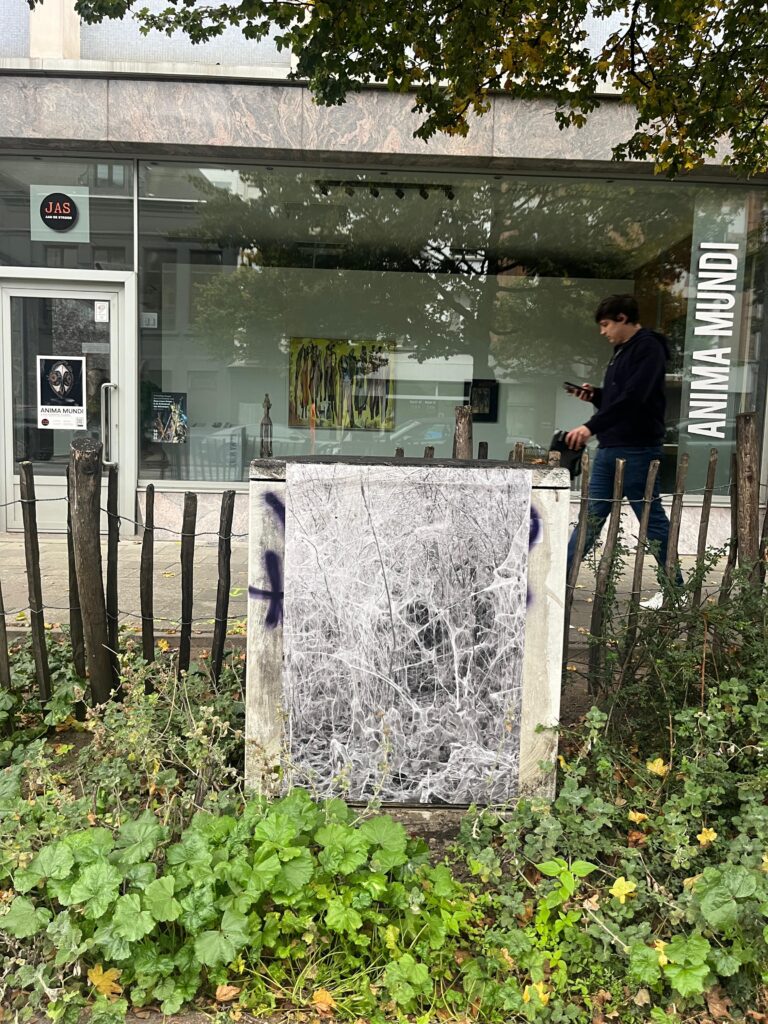
He applies a visual approach he calls “traumatic realism”: mixing the precision of documentary photography with poetic disorientation. Using long exposures—often at twilight or in extreme lighting—Goiris removes his own presence from the image. The camera records rather than testifies; it captures a state of being, a condensation of time and atmosphere, rather than discrete events.
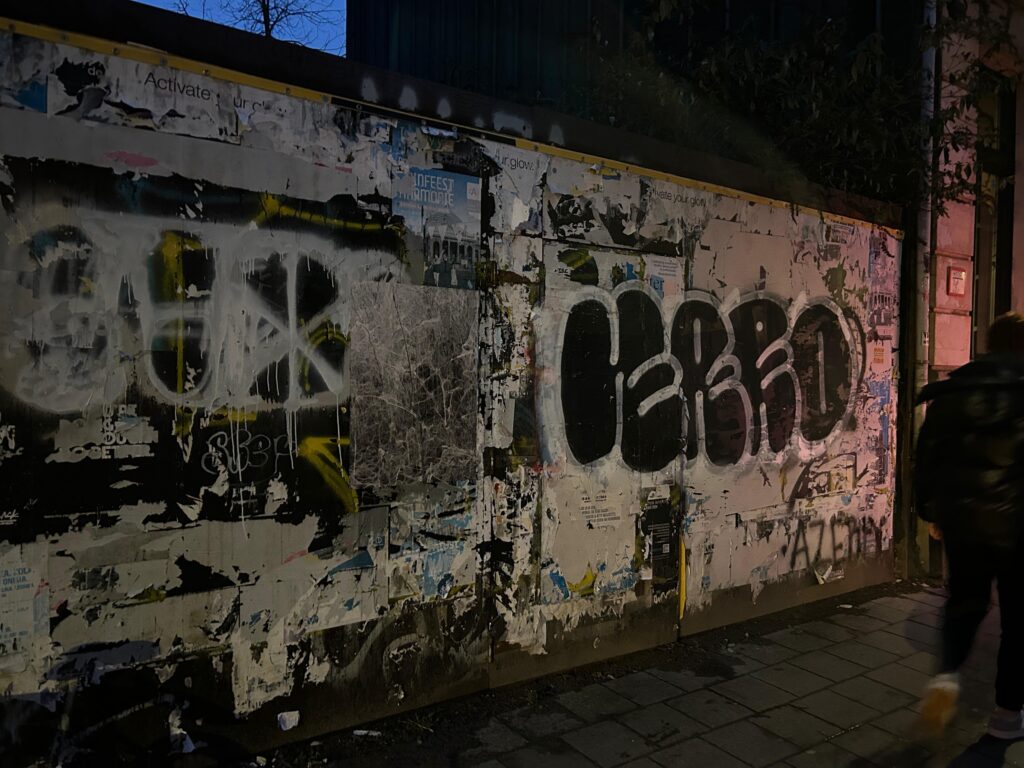
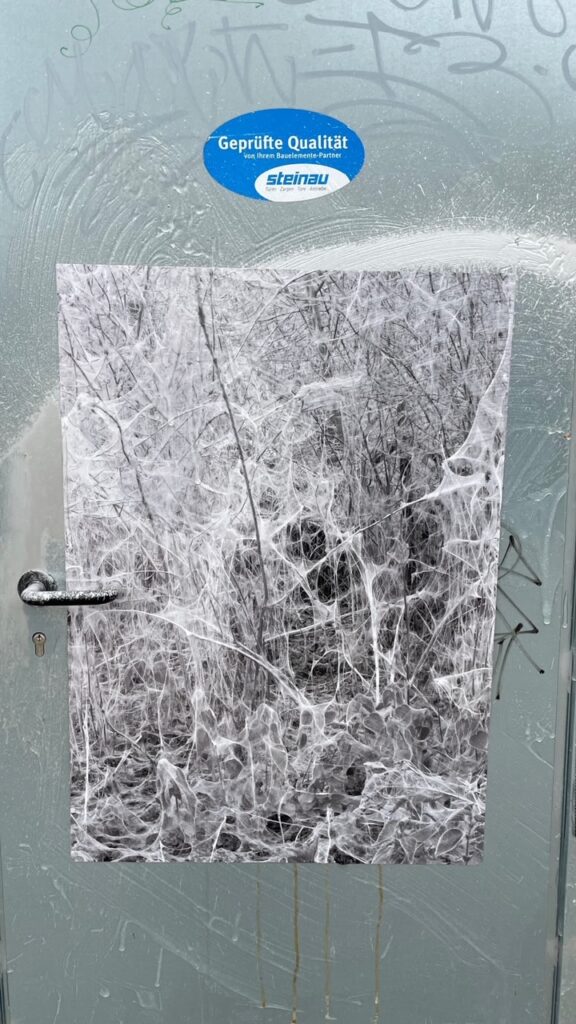
Left Bank is an enigmatic image showing a close-up of silky webs often found on trees and bushes in late spring. The fragile structure appears architectural, like a gate or veil between worlds. As in many of Goiris’ images, the formal quality of a membrane plays a central role—something that pushes against a surface, or in this case, draws you inward.
In public space, this delicate image becomes a soft disruption within the urban landscape. Perhaps it hints at shifts taking place just beyond our field of vision, changes not yet visible but already perceptibly present. It reminds us of our own smallness in the face of nature’s quiet indifference. In that stillness, something seems to be contained that has yet to unfold. A silent harbinger of what is yet to come.


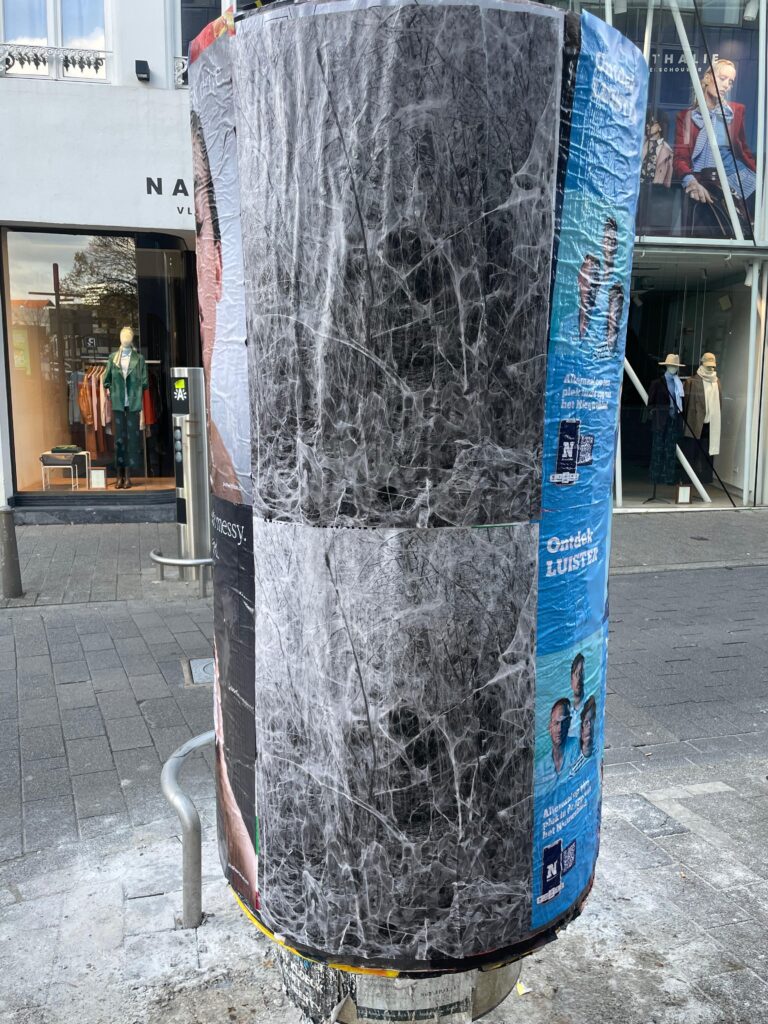
PLAKT invites artists to create a printed artwork, which is then pasted across the city. This is done by professionals who typically distribute event advertisements, giving them control over when and where the artworks appear. Embracing spontaneity and unpredictability, the posters pop up in unexpected spots, disappearing just as quickly—reflecting the uncontrollable, fleeting nature of city life. PLAKT is about creating unexpected encounters—brief moments of joy, curiosity, or reflection. Whether it’s a quick pause during a busy day or a smile on a familiar street corner, these artworks aim to connect art with the everyday, reminding us to live in the moment and embrace the unexpected nature of life.
We are spreading over 300 copies of each artwork across the public spaces of Brussels and Flanders. Exactly when and where? We don’t know—that’s part of the beauty.
A second chapter of PLAKT brings larger versions of all these artworks to IKOB, Eupen; CC Strombeek; De Warande, Turnhout; Kunsthal Mechelen; NW Aalst; De Brakke Grond, Amsterdam; C mine, Genk; Kapel Rozenkrans, Oostduinkerke; Museum Dhondt Dhaenens, Deurle; and Abby, Kortrijk. Each partner chooses the order in which they show these artworks and how frequently they change their presentation. Some locations will present the full series over the course of a year, while other partners will take four years to show all the artworks.