Museumplein 05
:
Veronika Bezdenejnykh
Images from Home
March - August 2026
Veronika Bezdenejnykh (pronounced ‘bez-de-NAY-nych’) was born in 1990 in Almaty, Kazakhstan, and lives and works in Brussels. She studied painting at KASK Ghent. Her paintings move between figuration and abstraction, exploring personal reflections, memories, and what she calls the essence of image-making itself. She describes a painting as a ‘transformation box’ or an ’emotion creation box’ — a space where the viewer is free to do whatever they want with it.
What makes her work so compelling is the way it builds meaning layer by layer. In her installations, individual canvases are presented against large printed or painted backgrounds that take over the entire exhibition space, making it feel like you’re stepping inside the painting itself. Up close, you discover small, carefully placed brushstrokes — like light shifting across a tiled surface.
‘In the village where I grew up there wasn’t really any art,’ says Bezdenejnykh, ‘but there were tapestries, and wallpaper with intricate patterns.’ The references she draws on span time and geography: Persian and Transylvanian carpets, Byzantine mosaics, wallpaper designs, the mysterious shimmer of pearls, fragments of personal memory, and much more. She starts from small reproductions in books, grainy images from online archives of historical decorative objects. Those blurry sources introduce distortions, which she amplifies and transforms in paint. ‘Like when you try to match two strips of wallpaper,’ she says. ‘Sometimes it doesn’t quite work, and that interruption makes an image really interesting.’

A motif from folk craft feels just as at home in her work as something pulled from antiquity. What interests her is what happens to meaning when an image is repeated and reinterpreted over time — how an original significance fades, and how that fading opens up space for new readings. Each work becomes, as she puts it, a network of layered interpretations, where repetition leads to transformation rather than mere reproduction.
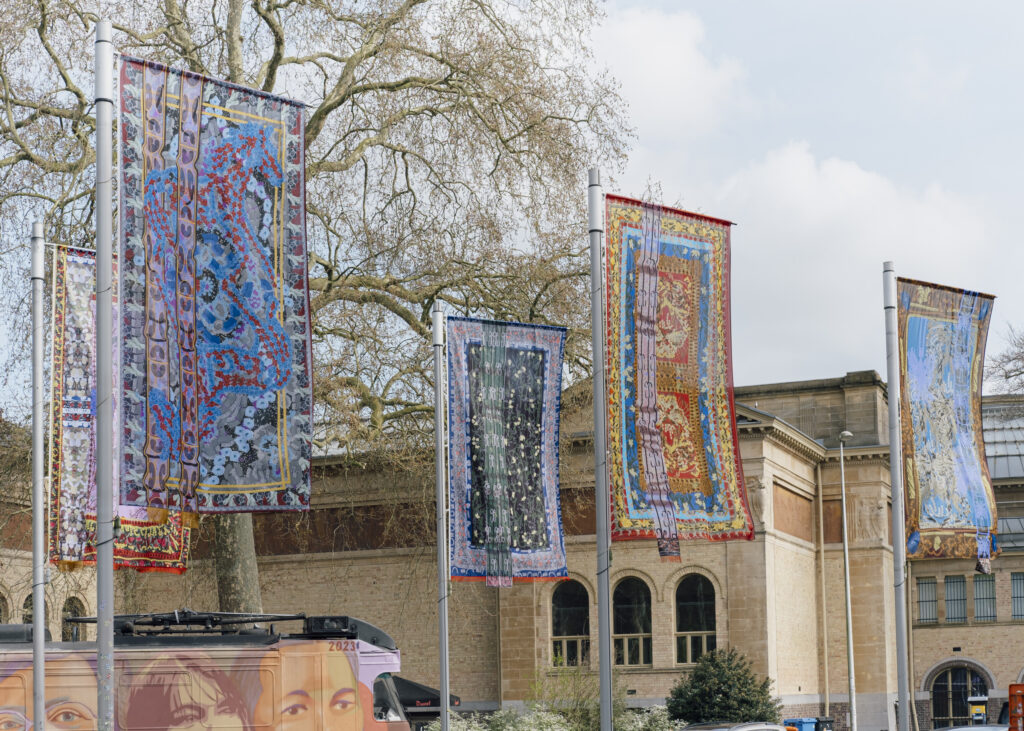
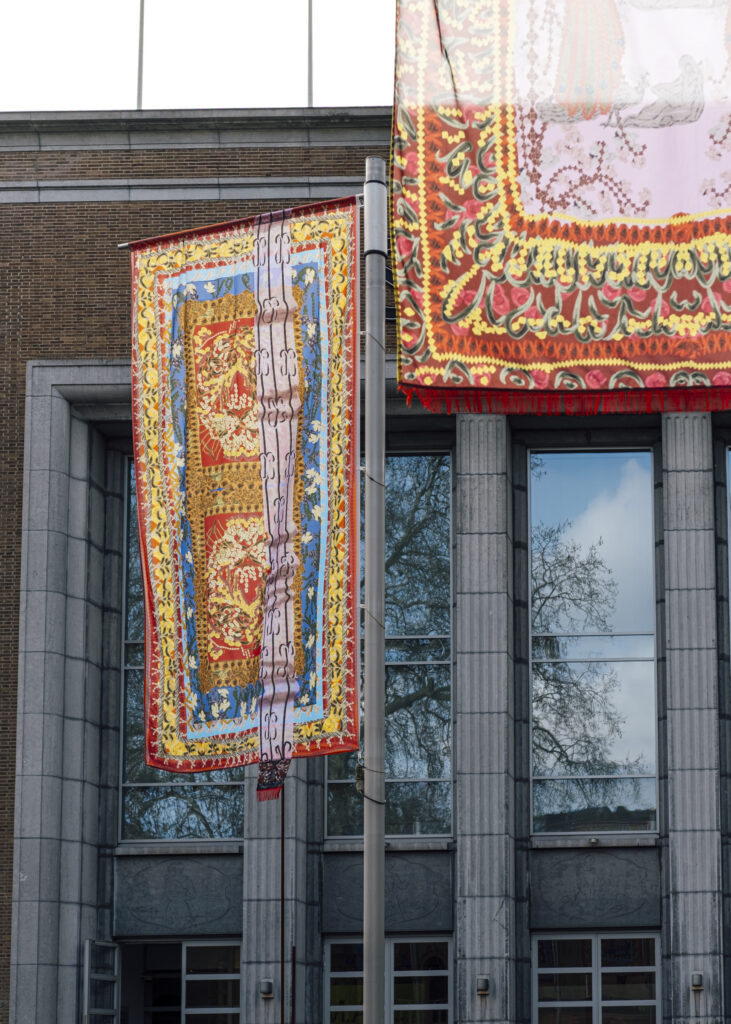
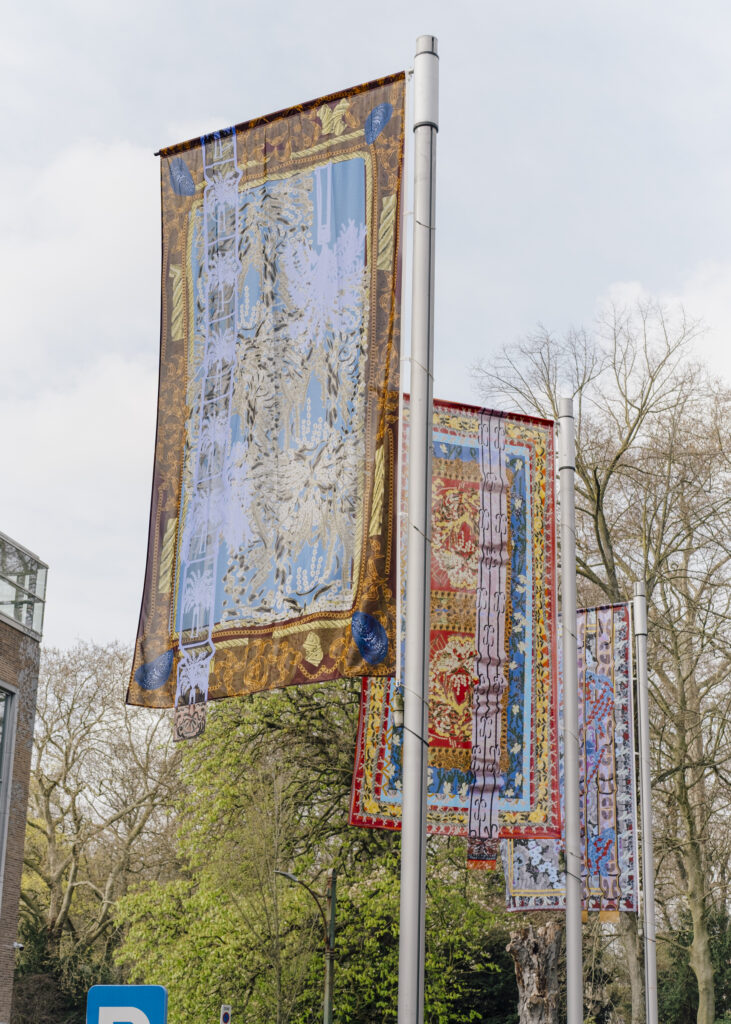
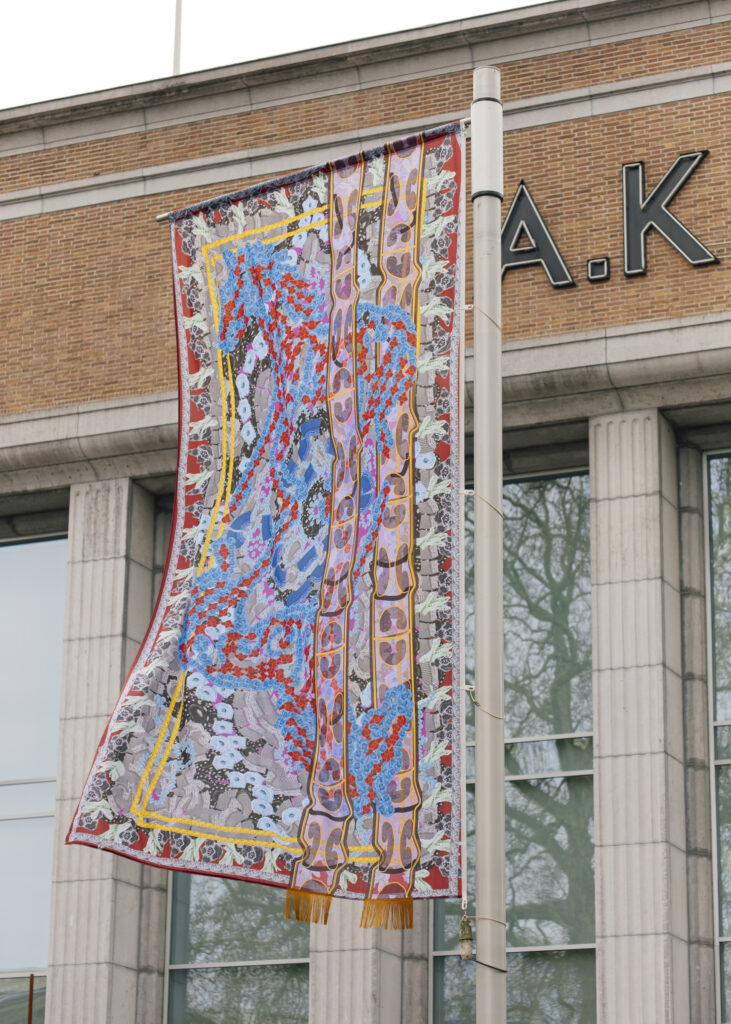
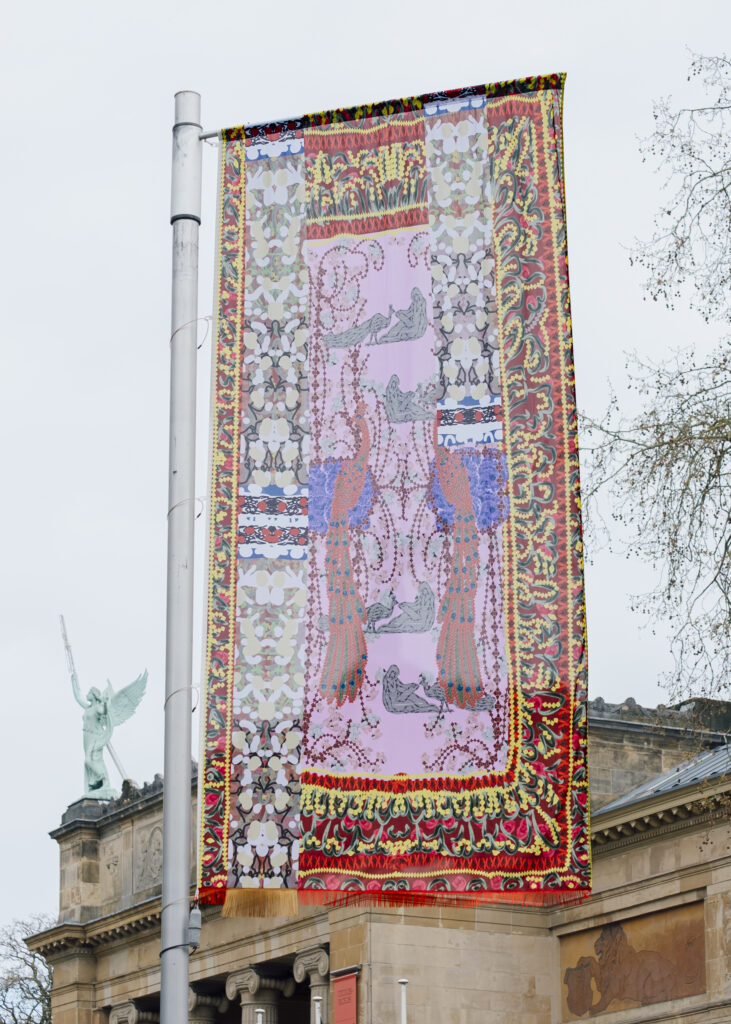
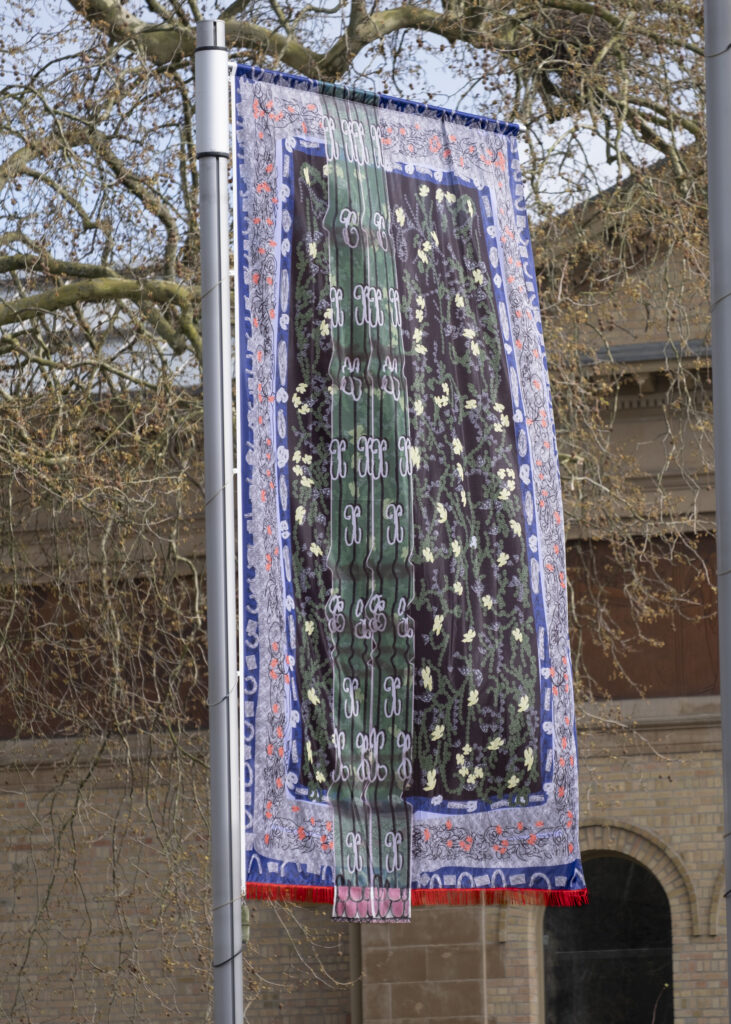
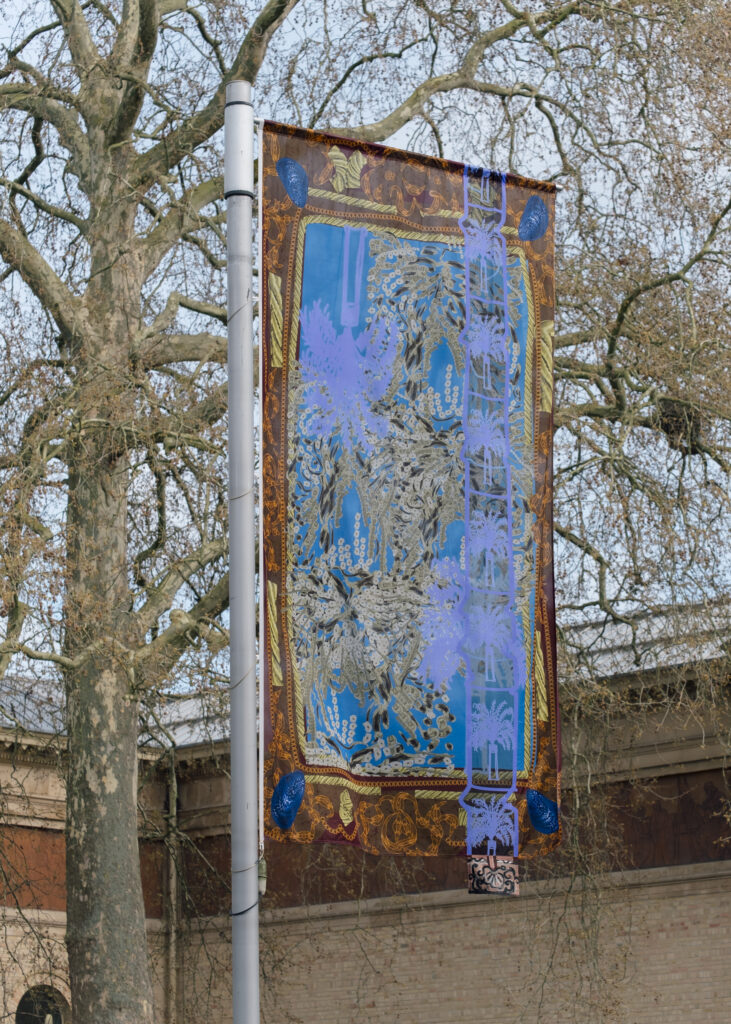
The series of flags Bezdenejnykh created for Museumplein looks at first glance like oriental carpets. But for those who look twice, the images reveal something quite different. She drew inspiration from walks through the Wondelgemstraat, in Ghent’s Rabot neighbourhood, where she lived for many years. The Rabot is an arrival neighbourhood for people with a migration background, and that is clearly visible in its shops: an Afghan bakery, a store with Romanian specialities, an Asian Dumbling House, an African supermarket, a Turkish decoration shop.
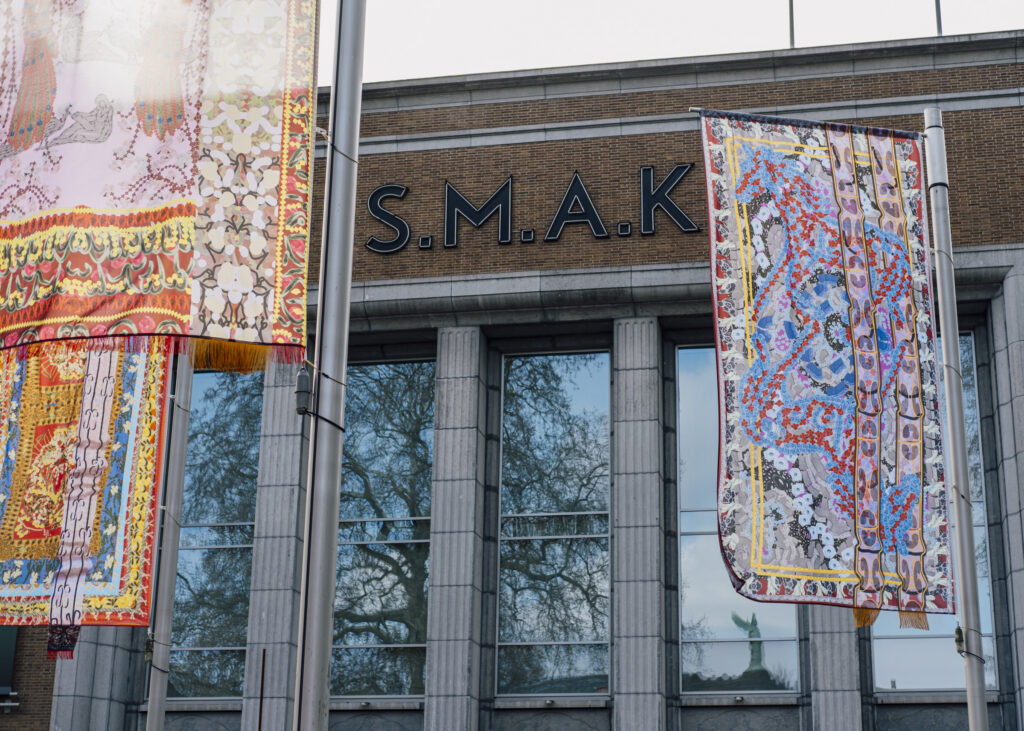
During her walks, Bezdenejnykh photographed details everywhere — from cake batter and menus to decorative interior patterns — and brought them together with elements from her digital archive (such as photographs of the pearls in Van Eyck’s paintings) and with details from the Jan Hoetplein itself, like the peacock gazing down from the Museum of Fine Arts. With Images from Home, Bezdenejnykh celebrates the diversity of the city, bringing a neighbourhood that rarely stands in the spotlight to the heart of the museum quarter.
Ghent is a city of many cultures and communities. Yet this richness is barely visible in its public monuments and squares, which still tend to tell one story — that of a particular history, a particular group. The ethnic and social diversity that shapes the city today, and has shaped neighbourhoods like the Rabot for decades, has left few traces in that official space. Images from Home is perhaps a first, tentative step in another direction. By bringing together patterns and details from the everyday lives of different communities on this square, Bezdenejnykh makes that invisible diversity briefly visible.
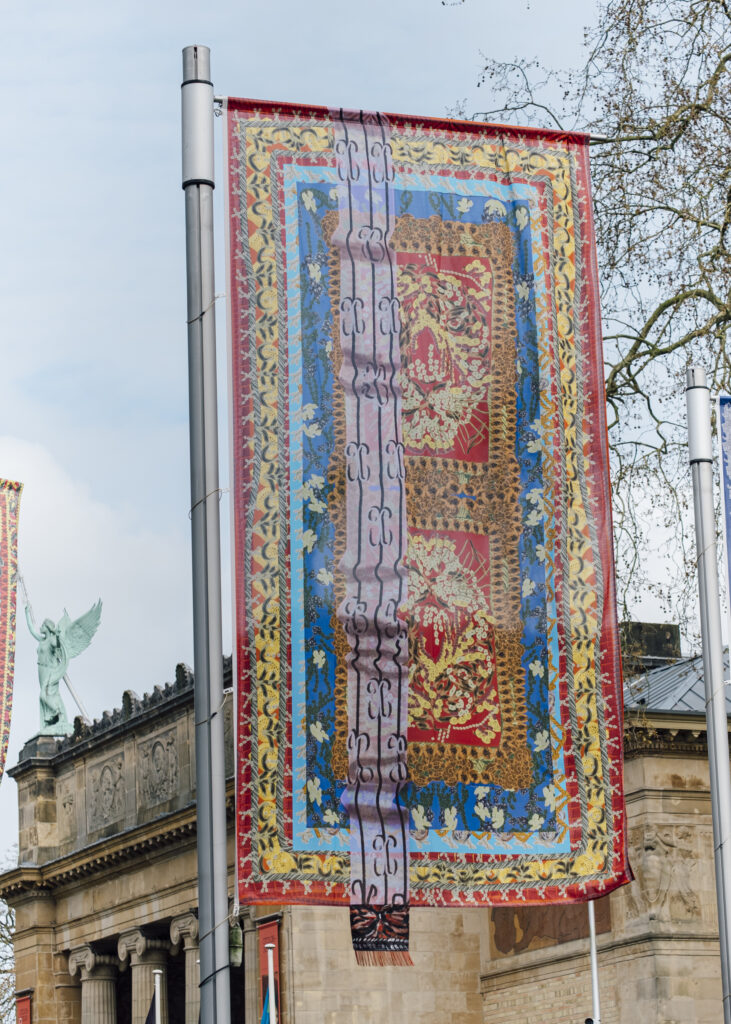
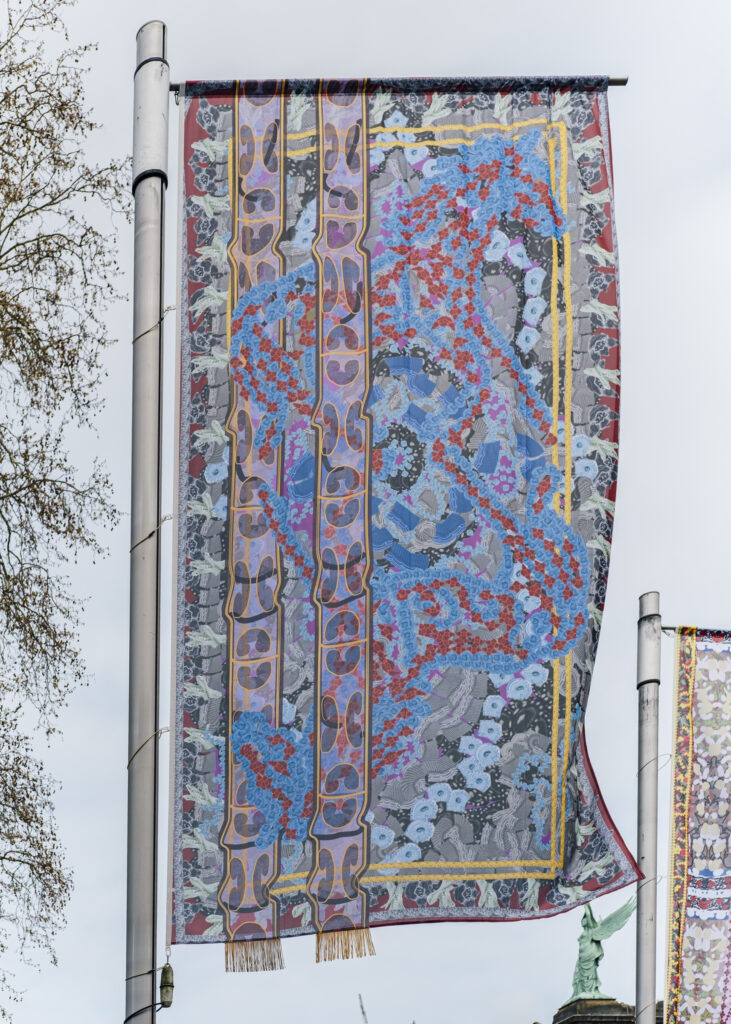
Museumplein is an open invitation for artists to create work that temporarily takes over Jan Hoetplein. This square connects several museums—S.M.A.K., MSK, and GUM—and is deeply rooted in Ghent’s history. On one side, it is framed by the Ghent Botanical Garden, while on the other, it is embraced by Citadel Park. Jan Hoetplein is a unique space full of possibilities.
With these presentations, we imagine what the future could bring and showcase a new series of public artworks. Every five months, Museumplein invites a different artist to create work for the five giant flags in the flower bed in front of S.M.A.K. Each piece engages with the square, the park, the city, and its residents, encouraging us to reflect on the role of art in public space—what it is, and what it could or should be.
Museumplein is a project by artlead and S.M.A.K, supported by the City of Ghent.
