Lili Dujourie
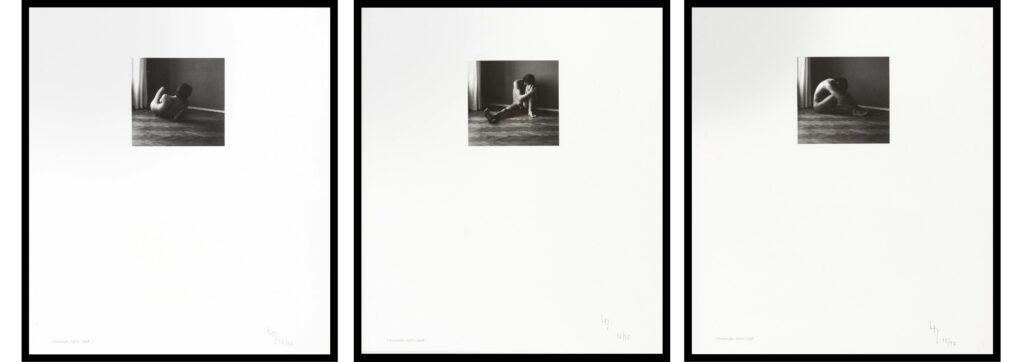
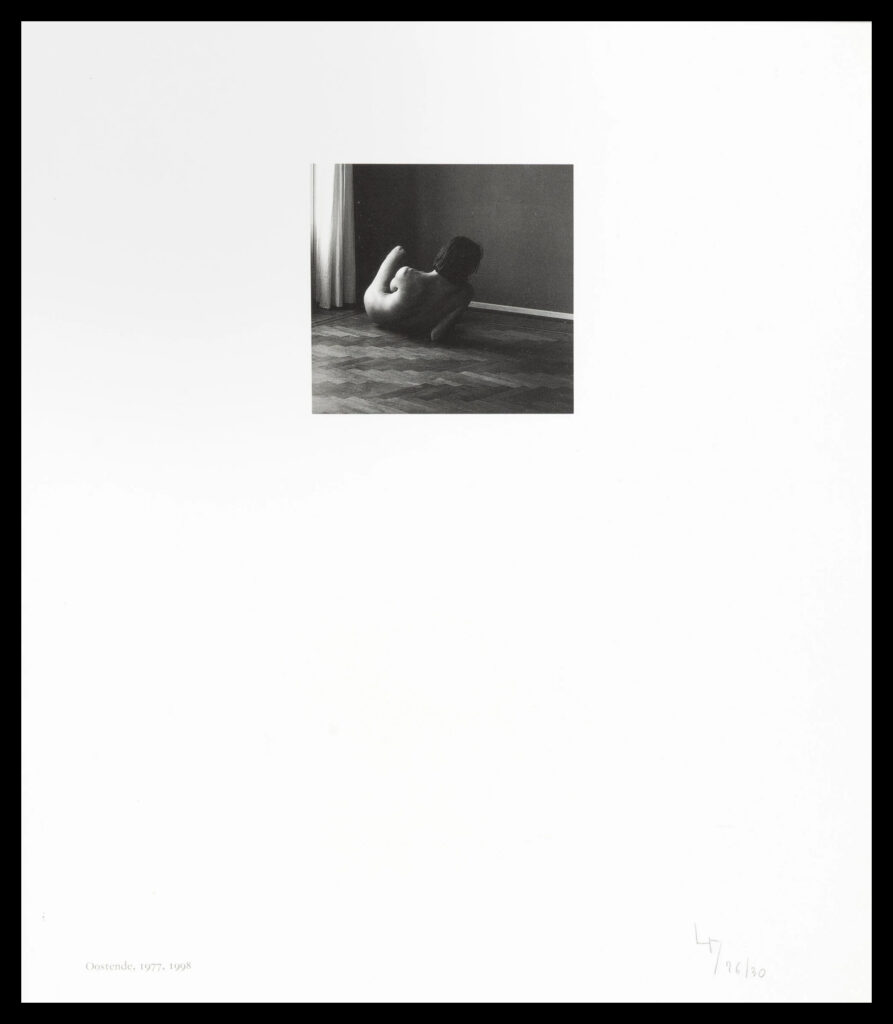
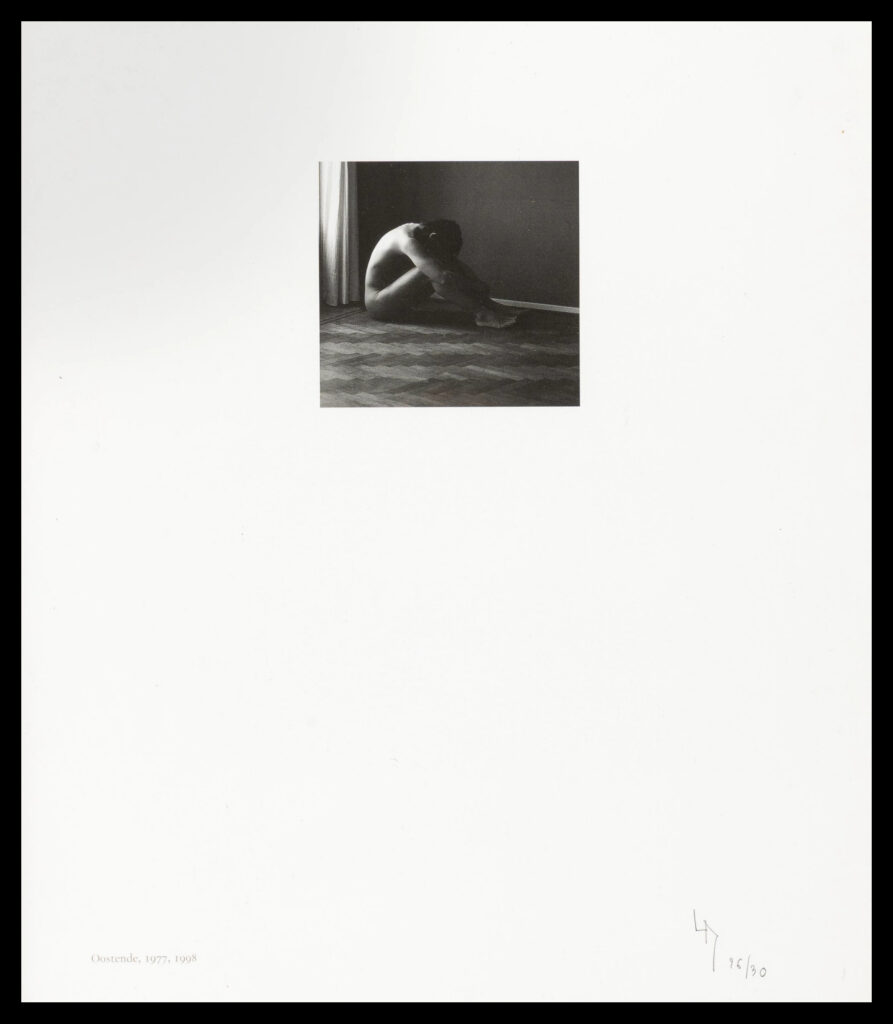
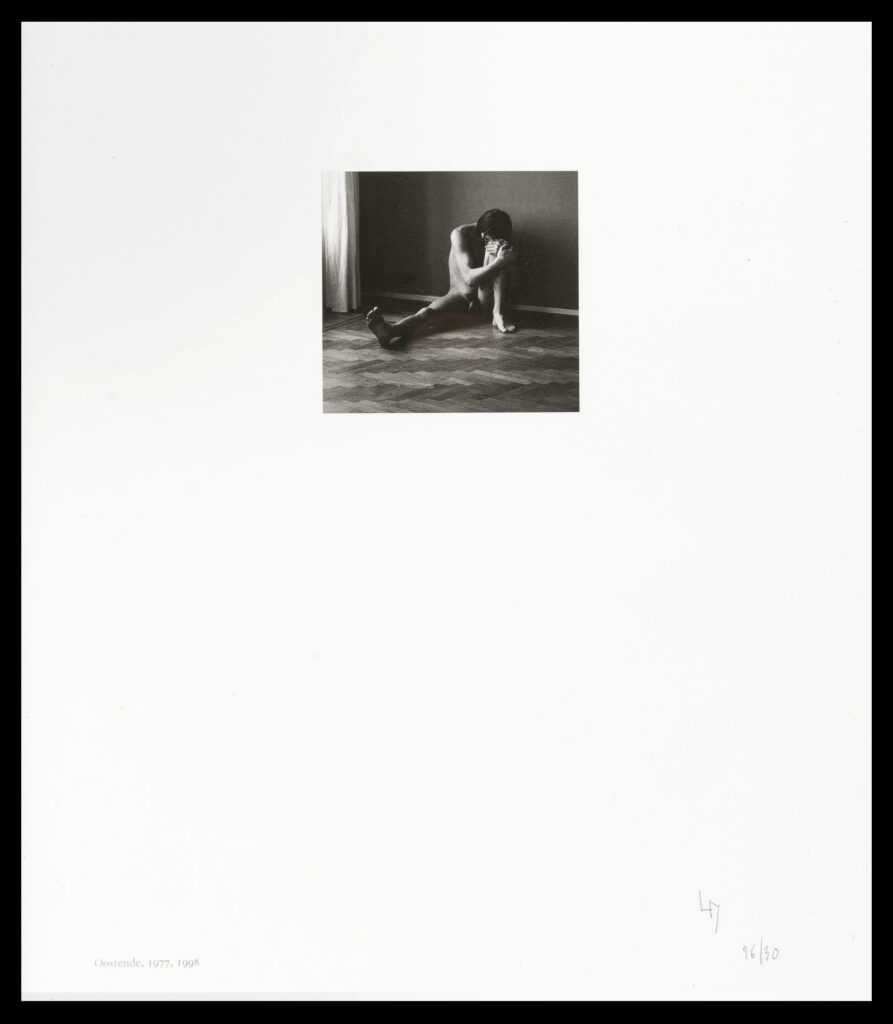
Oostende
1977-1998
€2400,00
Edition on paper, framed
Triptych, 34.4 x 29.3 cm each
Edition of 30, numbered and signed by the artist
about this work
In the seventies Lili Dujourie started a series of black and white photographs and videos now considered pioneering feminist works. By being both subject and object of her own images, she challenged the male gaze and took control of her own representation. This triptych Oostende (1977-1998) reverses that dynamic in an interesting way: it is not the female body that takes centre stage, but a nude male portrait. Dujourie places that body theatrically within the intimate domestic setting of her Ostend apartment, a universal scene of a wooden floor and a white curtain, heightening the tension between presence and absence, between showing and concealing.
about Lili Dujourie
At the end of the 1960s, Lili Dujourie manifested herself as an artist through her first sculptures at a time when women were still a rarity in a men’s world. In the 1970s, Dujourie’s practice shifted into photography and video, wherein her naked body performs various sensual poses. In this way, she also raised gender- and identity-related issues, which were prevalent at that time.
Since the 1980s she has also created several sculptural installations, often made of drapery, satin, smoothed plaster folds, mirrors, gold leaf frames, torn fragments of photos, etc. Dujourie creates these sculptural forms for the passing of time, where the presence disappears into absence and whereby the contrast of hiding and showing originates out of her search for balance.
more...