
PLAKT:
Aline Bouvy
Aline Bouvy is an artist who continually explores the shifting boundaries between identity, the body, perception and social norms. Her work moves fluidly between various media, often focusing on moments or attitudes that occupy the margins, where individuality and physical presence come into contact with social expectations. She brings forward what is usually overlooked or pushed aside: the unruly edges of behaviour, desire and self-image.
In her recent solo exhibition Hot Flashes at Casino Luxembourg, Bouvy examined the transitional phase between childhood and adulthood. It is a moment of observing, testing and becoming, while at the same time becoming aware of how others see us and how limited our supposed freedoms often are. What appears to be freedom — the freedom to play, to explore, to shape oneself — is frequently shaped by unspoken rules, expectations and forms of control. Bouvy reveals how even the most innocent moments of childhood are intertwined with systems of adjustment, self-monitoring and social pressure.
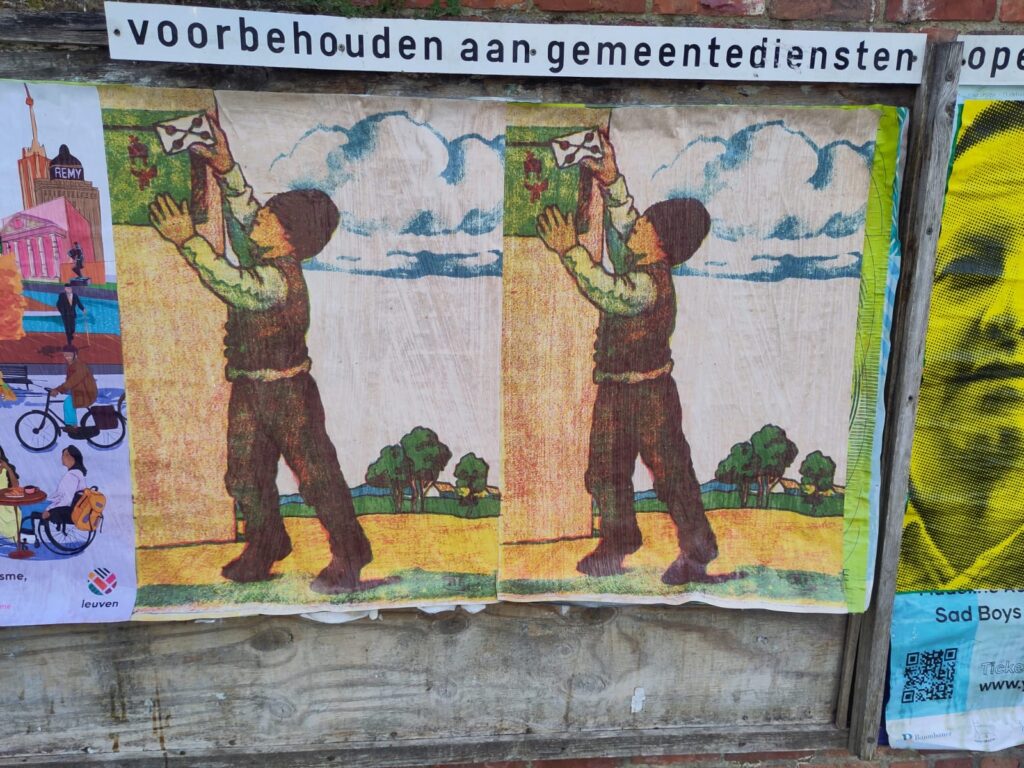

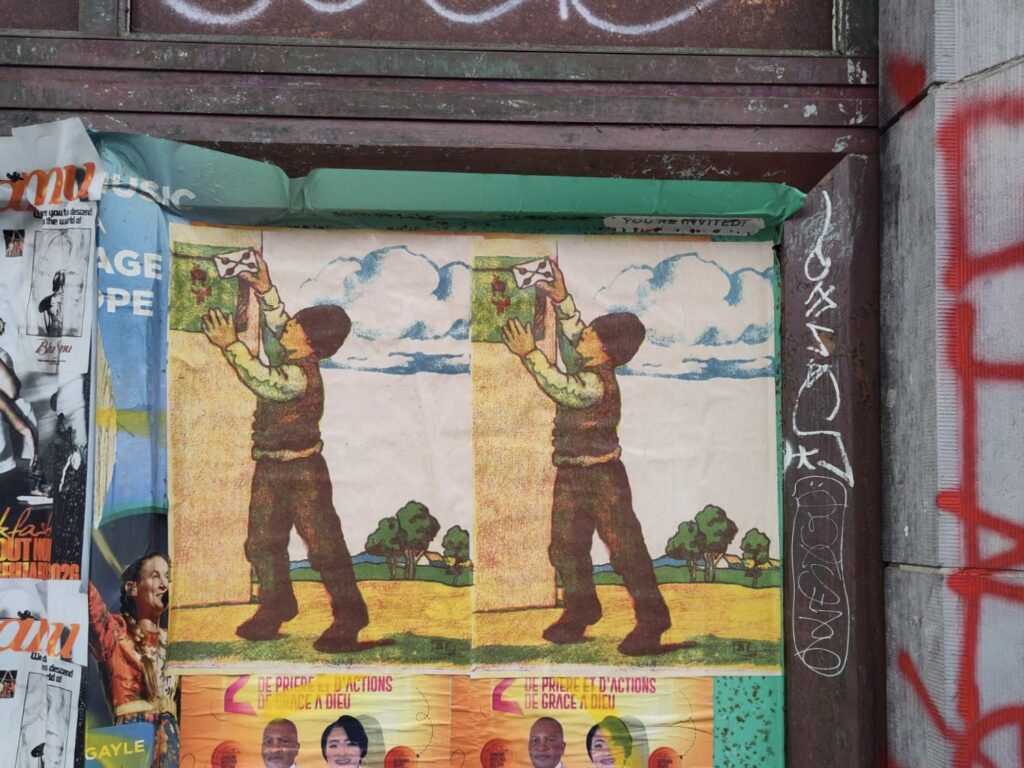

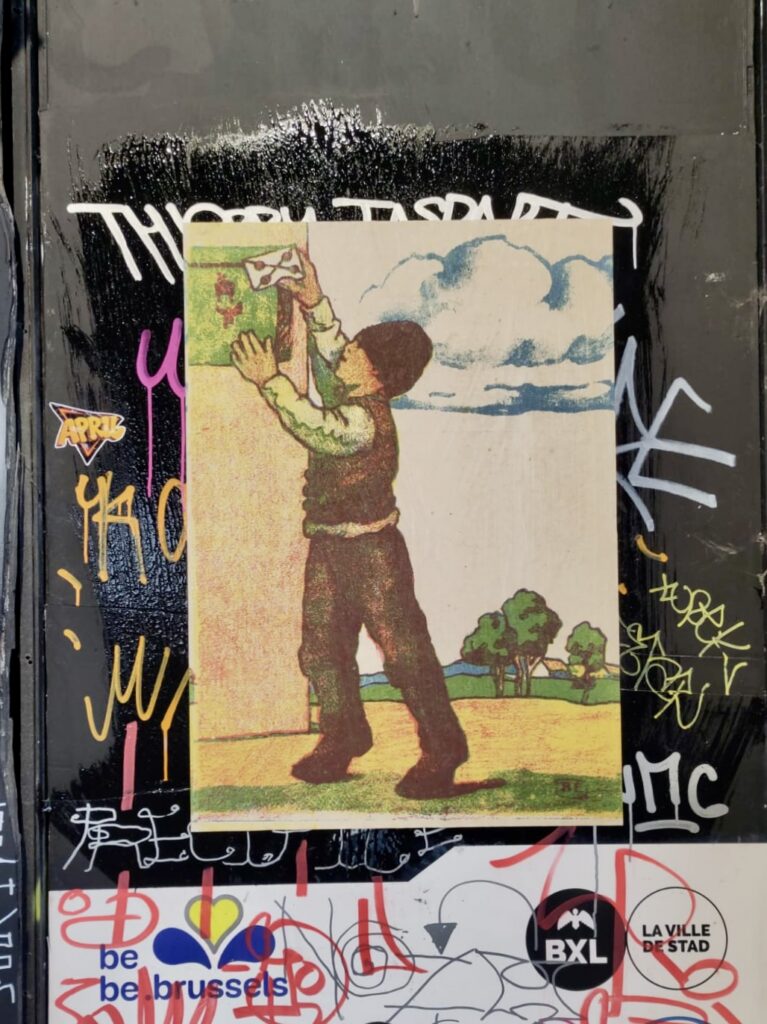

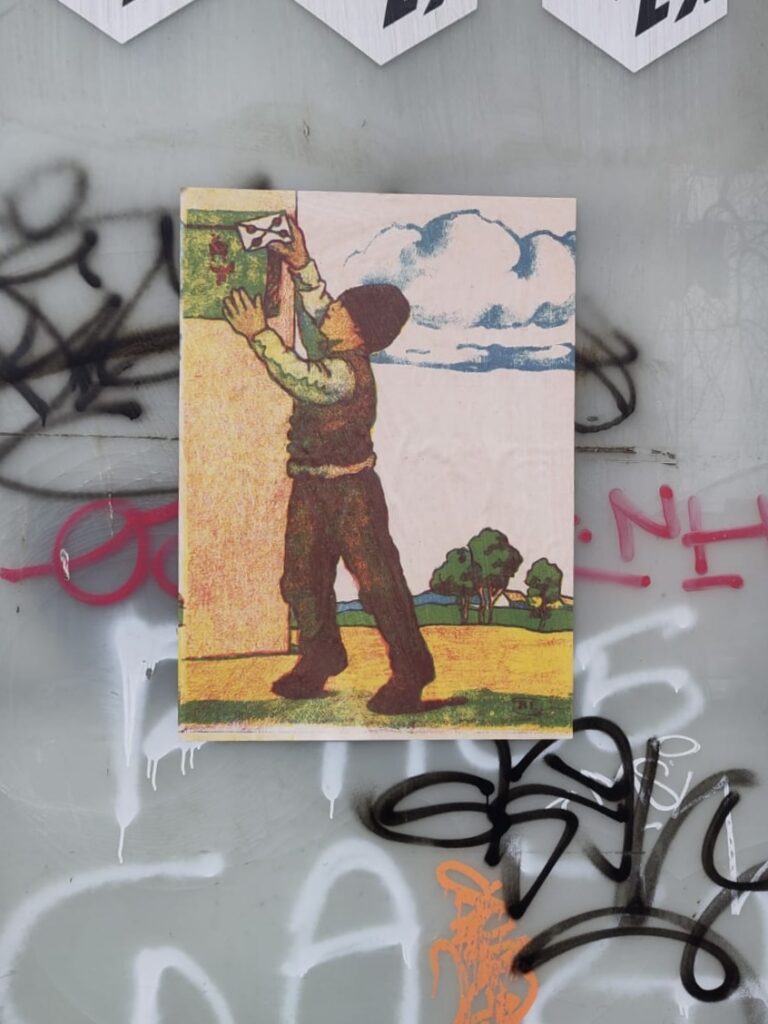
The image we’re using in the PLAKT series, Letter to my future self, shows an old postcard of a child posting a letter. Its nostalgic, gentle aesthetic, with clear contours, saturated colours and a dreamlike composition, recalls the visual language of another era. What first appears innocent becomes layered and reflective, raising questions about who we were, who we are, and who we hope to become. A letter to one’s future self is both curious and uncertain: an attempt to grasp an identity that never fully stands still.
In Hot Flashes, this postcard was hidden inside a drawer that closed automatically when a viewer approached, always close but never fully accessible. In PLAKT, however, the image enters the public sphere and appears on walls and surfaces encountered in everyday life. The small, intimate gesture of a child posting a letter becomes a collective one. It quietly encourages passers-by to think about their own path, their growth and the stories they carry about themselves. In the fast pace of the city, where attention is constantly pulled elsewhere, the picture offers a moment of pause and a reminder of the vulnerability of becoming, and the lasting need for imagination, doubt and change.
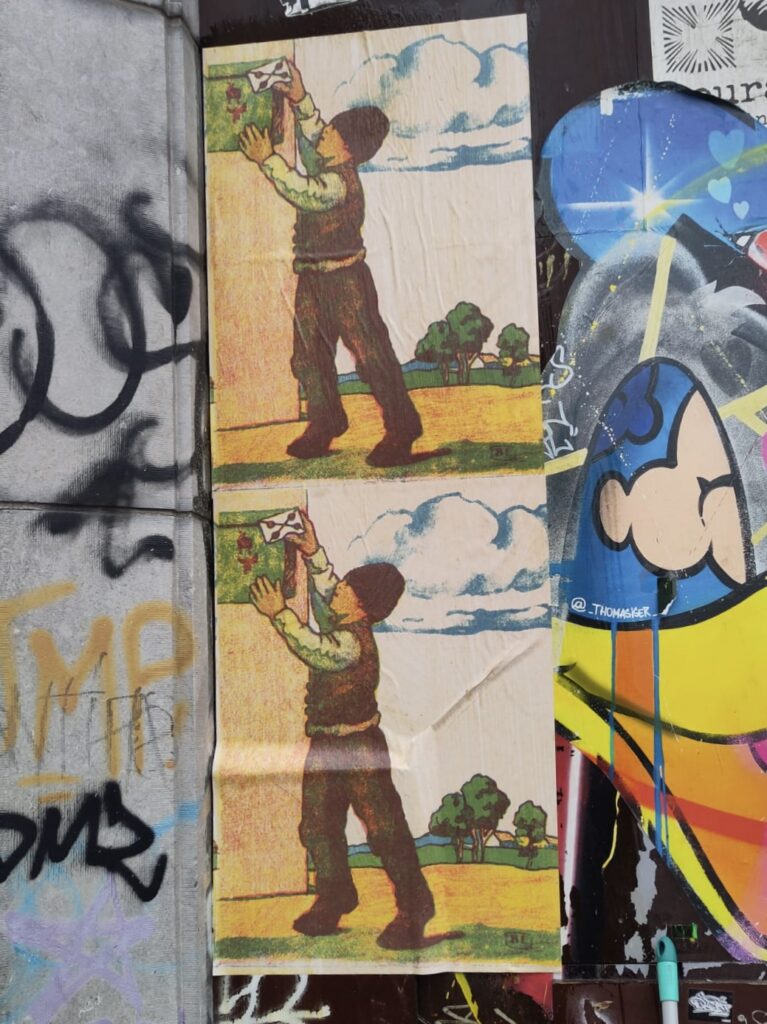
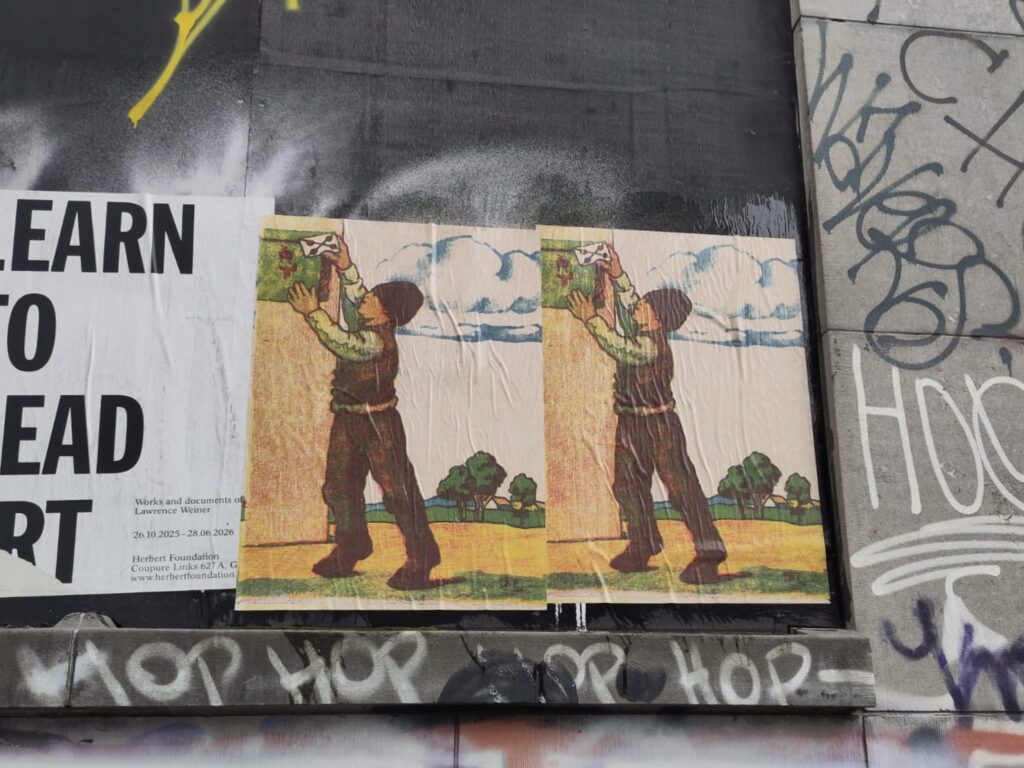
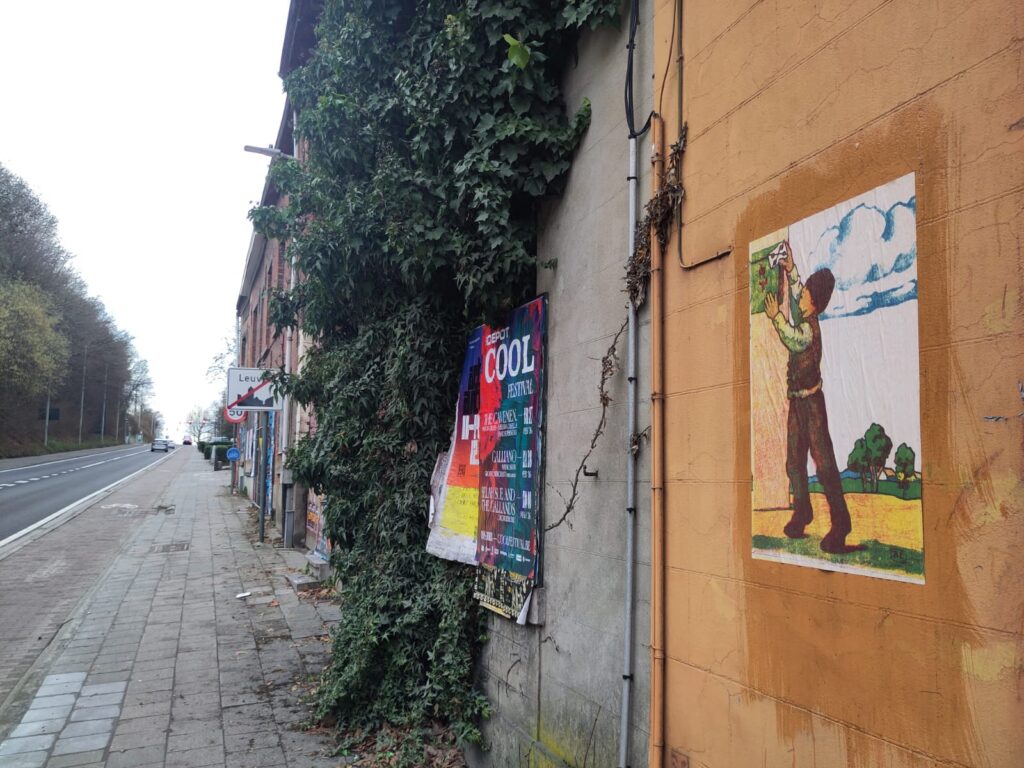
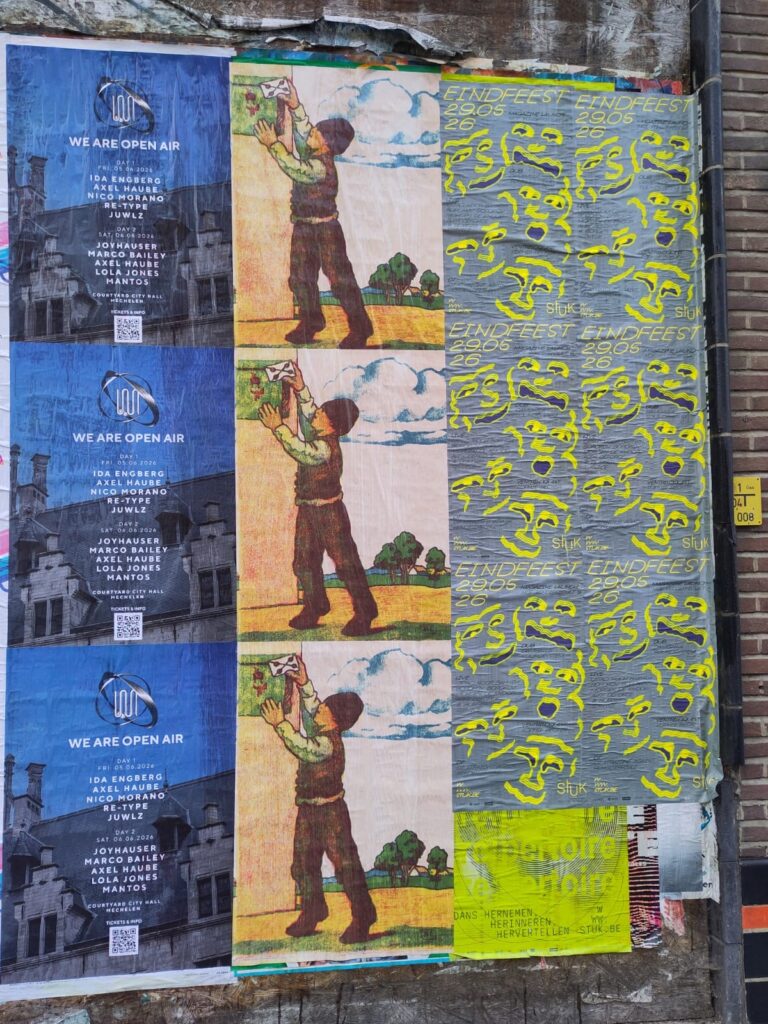


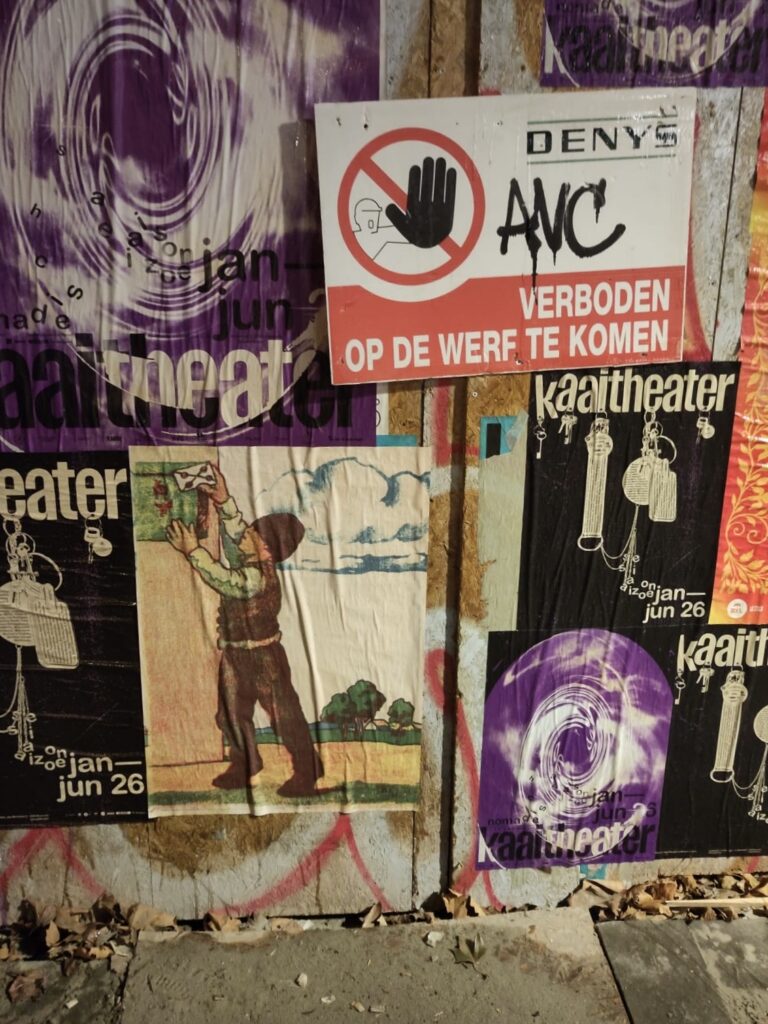
PLAKT invites artists to create a printed artwork, which is then pasted across the city. This is done by professionals who typically distribute event advertisements, giving them control over when and where the artworks appear. Embracing spontaneity and unpredictability, the posters pop up in unexpected spots, disappearing just as quickly—reflecting the uncontrollable, fleeting nature of city life. PLAKT is about creating unexpected encounters—brief moments of joy, curiosity, or reflection. Whether it’s a quick pause during a busy day or a smile on a familiar street corner, these artworks aim to connect art with the everyday, reminding us to live in the moment and embrace the unexpected nature of life.
We are spreading over 300 copies of each artwork across the public spaces of Brussels and Flanders. Exactly when and where? We don’t know—that’s part of the beauty.
A second chapter of PLAKT brings larger versions of all these artworks to IKOB, Eupen; CC Strombeek; De Warande, Turnhout; Kunsthal Mechelen; NW Aalst; De Brakke Grond, Amsterdam; C mine, Genk; Kapel Rozenkrans, Oostduinkerke; Museum Dhondt Dhaenens, Deurle; and Abby, Kortrijk. Each partner chooses the order in which they show these artworks and how frequently they change their presentation. Some locations will present the full series over the course of a year, while other partners will take four years to show all the artworks.