Billboard Series #36:
Anastasia Bay
Night Mother
January - May 2026
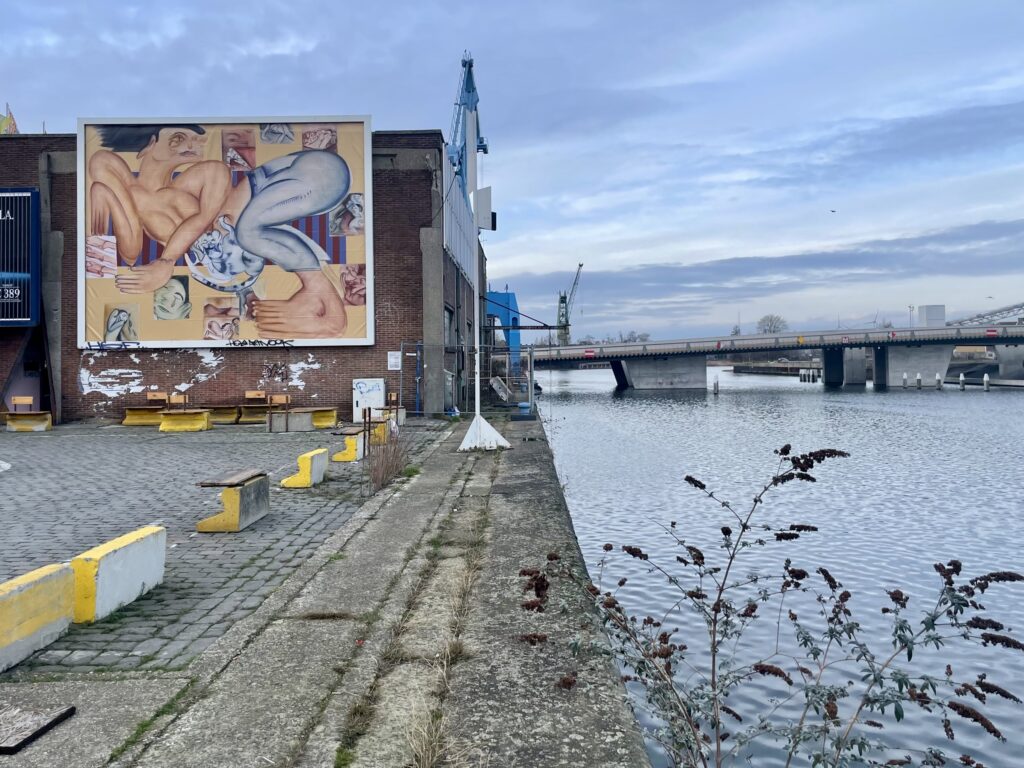
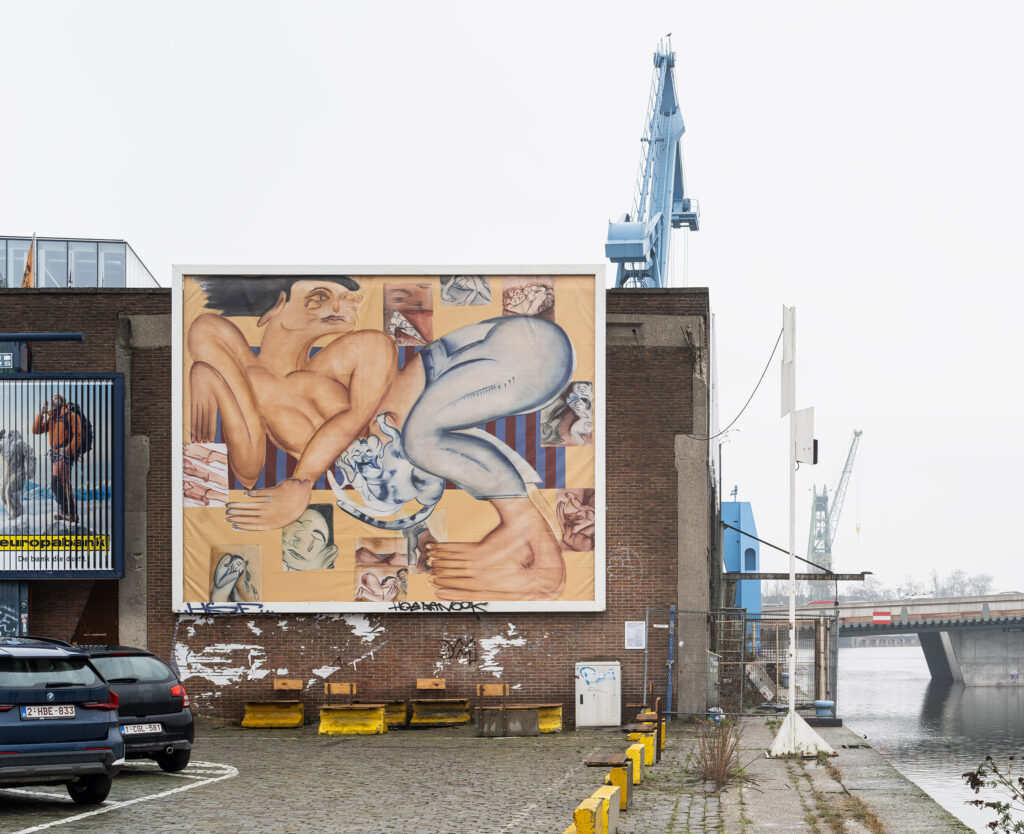
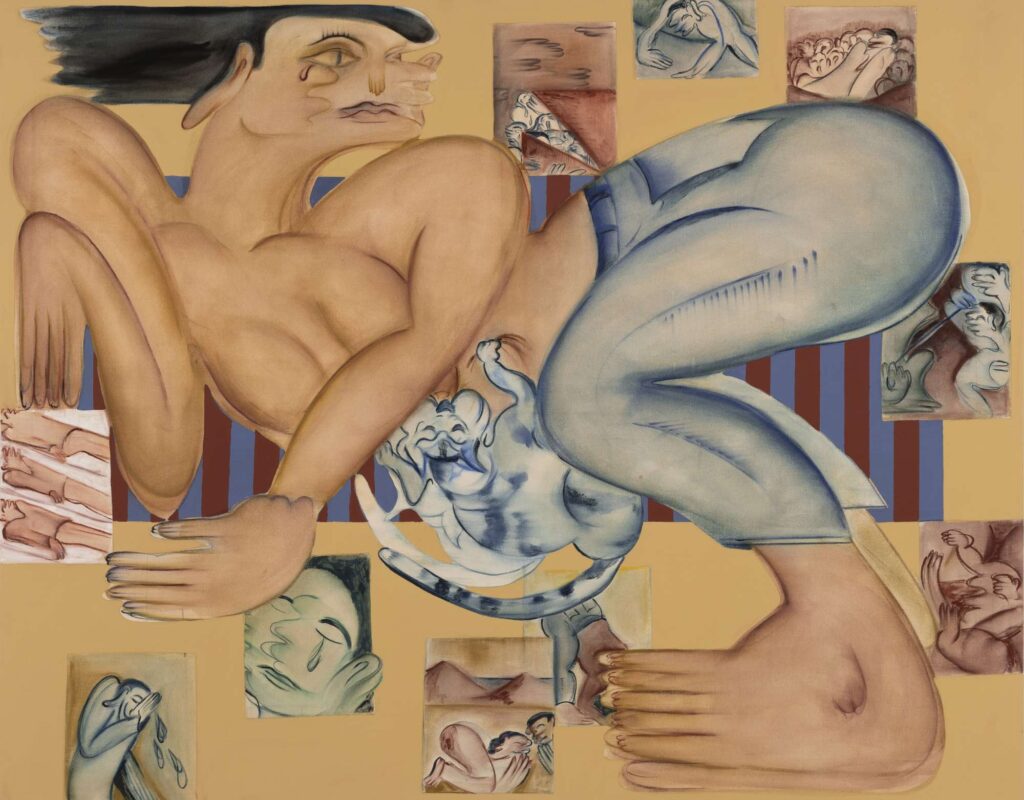
In Night Mother, a small cat rests in the lap of a leaning figure, its fragile body at once tender and tense. Around them, glimpses of other lives and events appear at the edges, faint reminders of struggle and vigilance beyond the immediate scene. This quiet tension sets the tone for Anastasia Bay’s recent series, where a collage of different gestures invite reflection on fragility, resilience, and the rhythms of everyday life. Bay’s most recent work balances private moments of care with the pressures of the wider world, reflecting her evolving attention to both human presence and the subtle moods that shape our experience.
Bay’s background quietly shapes her work. She grew up in Brussels and studied painting at La Cambre, where she first became interested in how the body can express tension and emotion. Now working between Belgium and France, she moves between outer and inner worlds, allowing memory, current events, and the small demands of everyday life to influence her imagery. Her paintings carry the mark of this journey, revealing an artist alert to how private feeling and the pressures of the world quietly meet in the body.
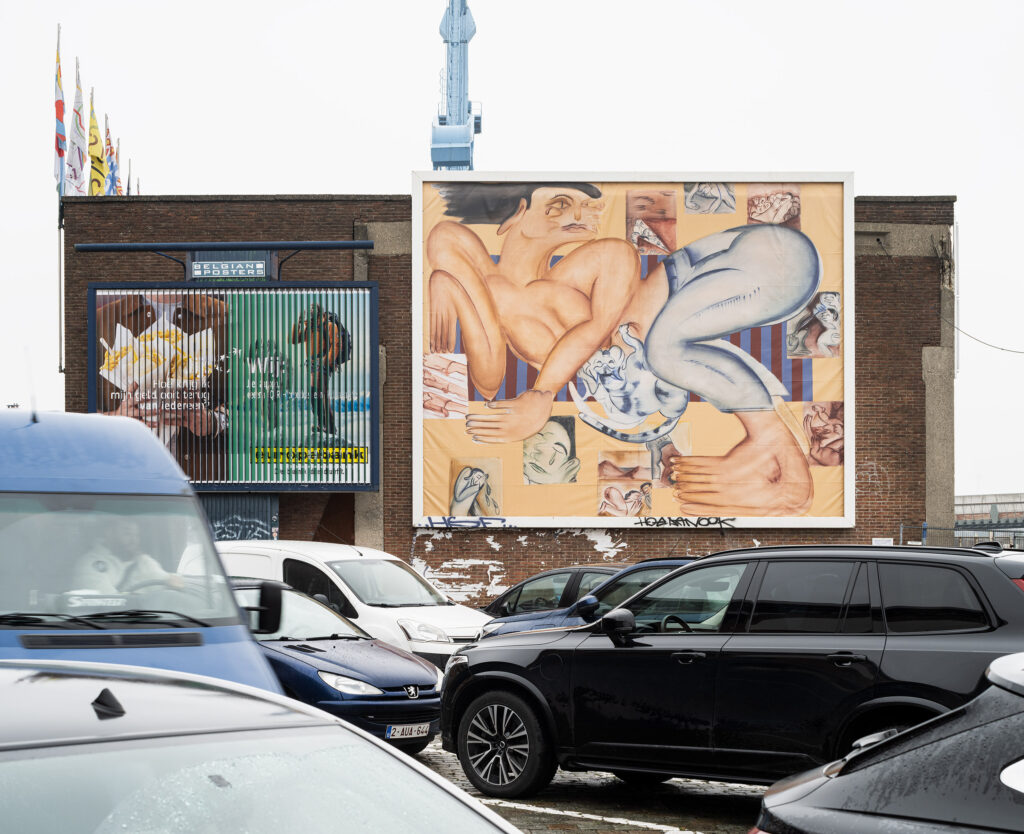
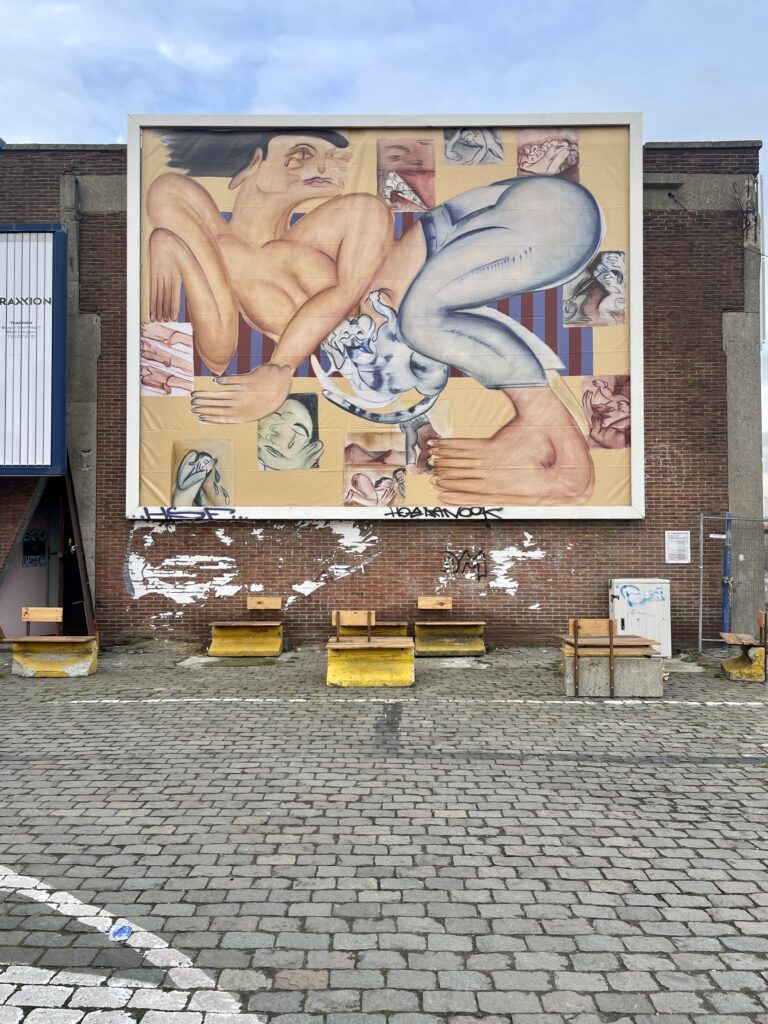
The painting on the billboard invites a careful look, drawing viewers into a space of quiet observation. A mother leans toward a small creature, her posture carrying both closeness and subtle strain, while their connection feels slightly unfamiliar. At the edges of the image, other scenes appear and fade, suggesting distant struggles and a sense of unease beyond the intimate moment. Shaped by news, memory, and older visual echoes, these elements gently disturb the calm of the central scene and create a mood of alert attention. They reflect how the mind moves between tenderness and awareness, placing the act of nurturing in relation to a wider and more uncertain world. Through this layering, Bay weaves together inner experience and external reality into a concentrated and watchful visual rhythm.
Before the shift that shapes her recent series, where care and vulnerability take center stage, Bay’s paintings were driven by the energy of bodies in motion. She focused on figures engaged in sport, captured at moments of strain, with limbs reaching toward physical limits. Each composition explored tension and effort, and the canvas itself seemed to pulse with movement and force. These earlier works were shaped by ideas of strength, ambition, and the poetry of movement, leaving little room for stillness or inward reflection. By contrast, the protective focus of her recent work marks a deep change in her practice. The same intensity now turns inward, where the body becomes a place in which emotional weight gathers and is quietly held.
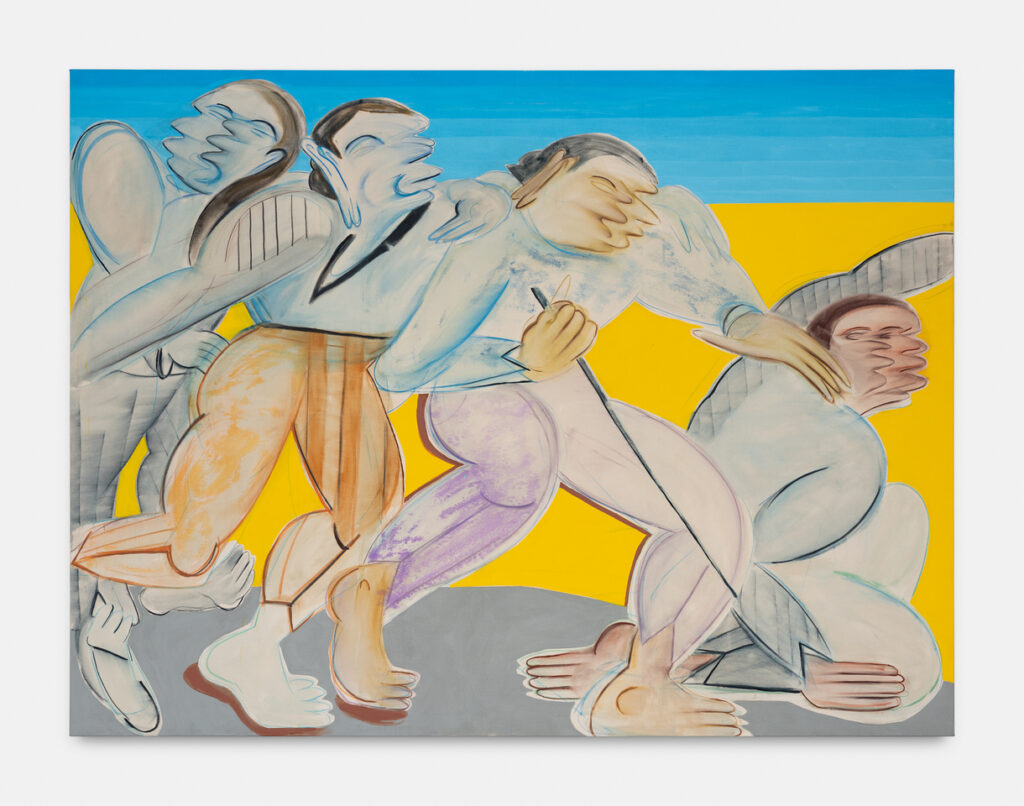
Anastasia Bay - The Stumbler’s Parade (Landscape), 2022
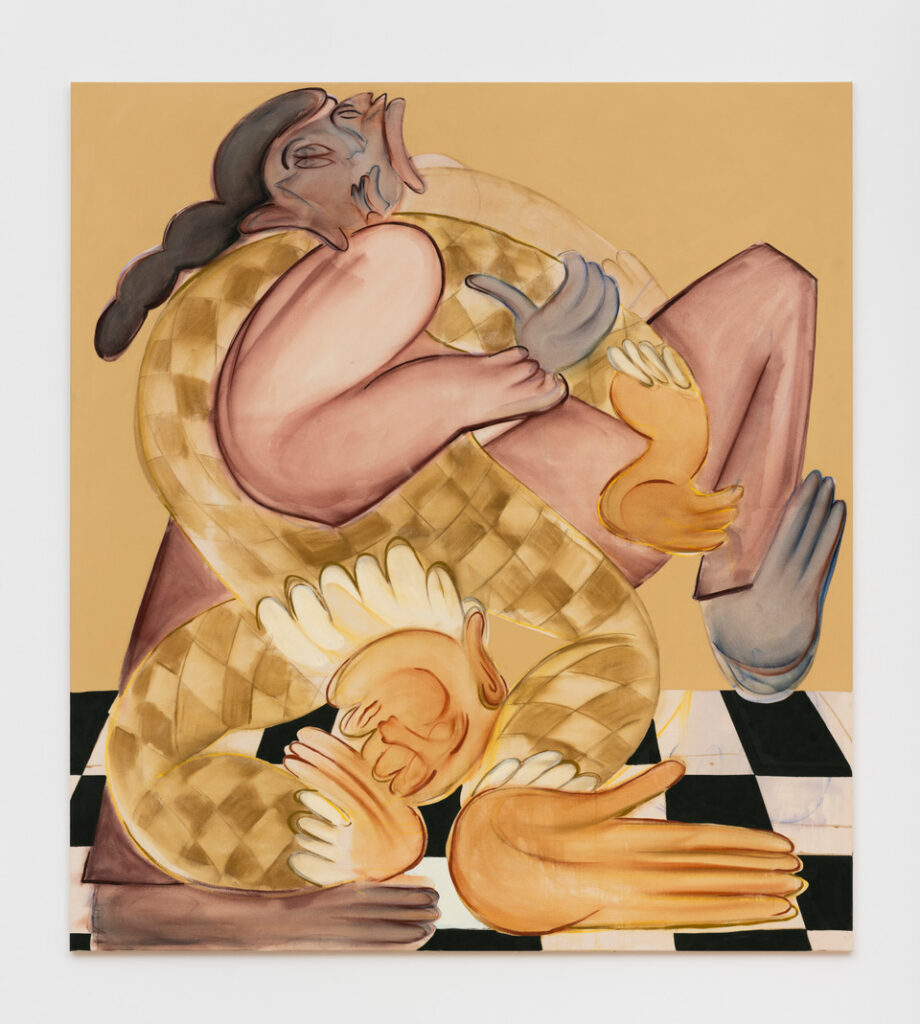
Anastasia Bay - L'enlevement, 2024
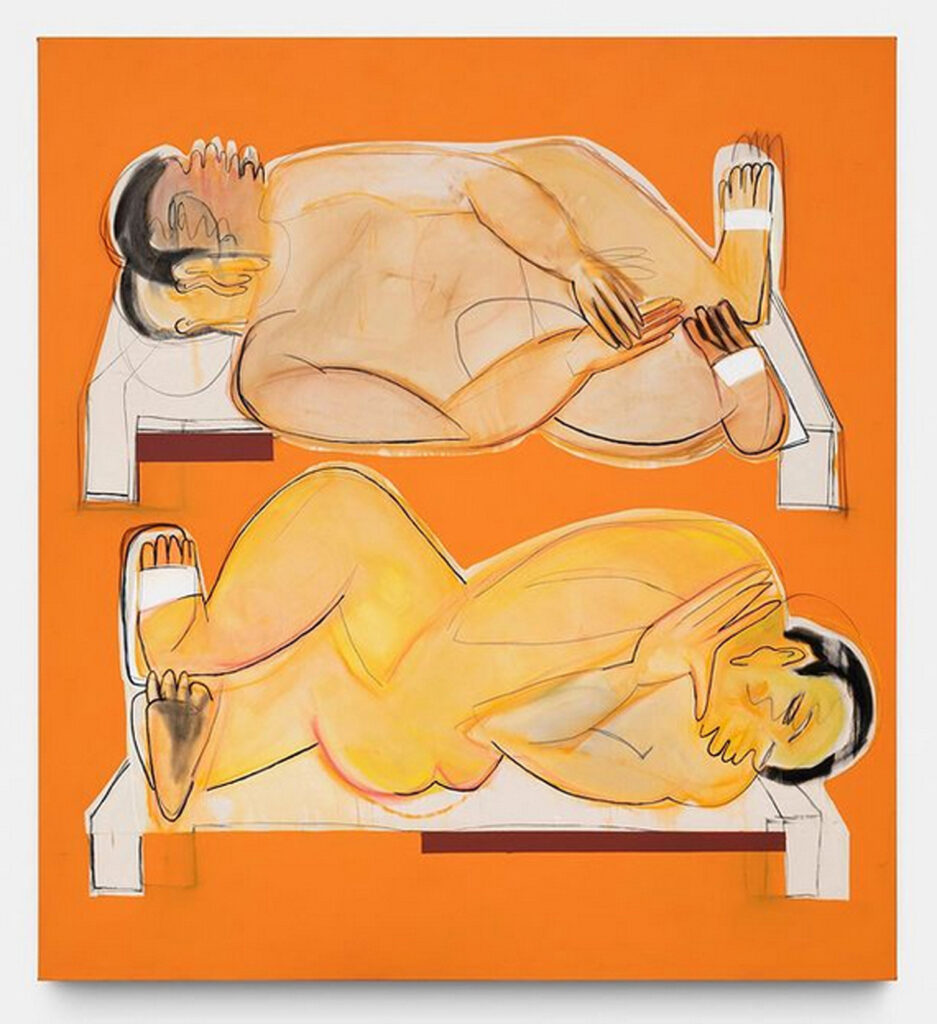
Anastasia Bay - End of Party, 2021
Within this context, the work points toward a larger and uneasy question: why do we continue to bring new life into a world so marked by suffering? Bay became a mother at a time when news of violence, displacement, and loss pressed in from all sides. While the world appeared overwhelmed by crisis, her attention was drawn into the small, repetitive acts of care, creating a brief sense of shelter and focus. This contrast between private closeness and public hardship runs through Night Mother. The quiet tension between nurturing and witnessing gives the painting both intimacy and weight. Without resorting to melodrama, the work makes visible the emotional negotiations of motherhood, where attention is constantly held between love, fear, and responsibility.
Presenting this painting in a public space, such as a billboard, invites reflection on the visibility of care and the spectrum of motherhood. What does it mean to place a private and intimate negotiation of vulnerability and responsibility into the shared environment of everyday life? How might encountering this delicate balance of fragility and resilience in public shift our understanding of parenthood and caregiving? By opening this vulnerable discourse to a wider audience, the work asks viewers to consider what is seen and unseen in the lives of those who nurture. It encourages reflection on how society engages with the quiet and often unspoken labor of care.
In the end, Night Mother is not only a reflection on motherhood but also on care as a moral and social responsibility. Bay’s work shows that creation, whether of life or art, continues not despite the world’s fragility, but through acts as quiet forms of resistance such as attention and love. By staying with the tension between tenderness and fear, she turns maternal vigilance into a space for reflection. The painting moves quietly, showing that fragility and attentiveness are central to how we live and care, even in uncertain times. Through Night Mother, Bay invites the viewer to consider the intimate relationship at its center alongside the wider world around it, prompting reflection on how attention and care connect us to the lives of others.
All images courtesy of the artist
Text: Natalija Gucheva
Installation photography: Michiel De Cleene & others
Billboard Series is a long-term art project in public space, for which every three months an artist is invited to create a new, site-specific work for a 50 m2 billboard on Dok Noord, Ghent. Through changing presentations, Billboard Series wants to build a sustainable and productive dialogue with the surrounding neighbourhood and urban landscape, reflect on the changes that this neighbourhood is currently undergoing, and introduce a broad audience to different visual languages and ways of looking at the world. For each Billboard Series, we create a small publication that we distribute for free in the neighborhood. Students from the Postgraduate Program in Curatorial Studies at KASK, Ghent, write the accompanying text.
Billboard Series is a project of artlead, together with 019. Billboard Series is curated by Thomas Caron, takes place within a scenography by architect Olivier Goethals, and is being developed with the support of the City of Ghent.
